

Skin Barrier Damage 101: What Happened, Why It Matters, How to Fix It

You know your barrier is damaged if you're experiencing:
-
- Tightness and discomfort, even after moisturizing
- Sudden sensitivity to products that used to work fine
- Redness that won't go away
- Rough, flaky texture that makeup won't sit on
- Stinging when you apply anything—even water
- Oiliness AND dryness at the same time
- More breakouts than usual (even though your skin is "dry")
If you checked 3 or more, your barrier is compromised.
Here's what that actually means, what caused it, and—most importantly—the clinical protocol for repairing it in 2-4 weeks.
Barrier repair isn't complicated, but it is specific. You can't just "moisturize more" and hope for the best. You need the right ingredients, in the right order, at the right concentrations.
This article breaks down the exact protocol dermatologists use for barrier repair, backed by clinical research and formulation science. No fluff. Just what works.
Start Barrier Repair Today - Shop The Set
What Is Your Barrier (And What Does "Damaged" Mean)?
Barrier 101: The Science Your Dermatologist Wishes You Knew
Your skin barrier is the outermost layer of your epidermis, also called the stratum corneum.
Think of it as a brick wall:
-
- The Bricks: Corneocytes (dead skin cells)
- The Mortar: Lipids (ceramides, cholesterol, fatty acids)
When this wall is intact:
-
- Water stays in (hydration)
- Irritants stay out (protection)
- Your skin regulates itself (homeostasis)
When it's damaged:
-
- Water escapes (dehydration)
- Irritants penetrate (inflammation)
- Everything hurts (sensitivity)
The Technical Explanation:
To confirm if you’re barrier is damaged, here is what dermatologists measure:
TEWL (Transepidermal Water Loss): The rate at which water evaporates through your skin.
-
- Healthy skin: 4-8 g/m²/h
- Damaged barrier: 15-25+ g/m²/h
Ceramide levels:
-
- Healthy skin has a specific ratio of ceramides 1, 3, and 6.
- Damaged barriers show 30-50% reduction in total ceramides.
pH balance:
-
- Healthy skin is slightly acidic (4.5-5.5).
- Damaged barriers become more alkaline (6.0+), which impairs repair enzymes.
The Clinical Definition:
Your barrier is "damaged" when it can no longer effectively prevent water loss and protect against environmental stressors. The result? Every symptom on that checklist above.
The Self-Repair Mechanism (Why It's Not Fixing Itself)
Here's the frustrating part: your skin WANTS to repair itself. It has enzymes specifically designed to synthesize new ceramides and restore barrier function.
But barrier repair requires:
-
- The right building blocks (ceramides, cholesterol, fatty acids)
- The right pH (slightly acidic)
- No ongoing damage (you have to stop the destructive behaviors)
Without all three, your skin tries to repair but keeps failing. That's why your barrier damage feels stuck: your skin is working with insufficient materials while you keep re-damaging it.
The solution: Give your skin what it needs and stop doing what's hurting it.
The Clinical Barrier Repair Protocol
Clinical research on barrier repair consistently shows you need three things:
1. Lipid Replacement
Replace the ceramides, cholesterol, and fatty acids that were stripped away.
Critical insight: The RATIO matters. Studies show optimal barrier repair occurs with a 3:1:1 ratio of ceramides : cholesterol : fatty acids.
Random ceramide creams without this ratio? Less effective.
2. Hydration & Humectants
Pull water into the skin and keep it there.
Critical insight: You need both humectants (pull water in) and occlusives (seal water in). One without the other doesn't work.
3. Anti-Inflammatory Support
Calm the inflammation that's preventing repair.
Critical insight: Active inflammation impairs the enzymes that synthesize new ceramides. You have to soothe inflammation to enable repair.
The Clinical Timeline
Based on peer-reviewed research on barrier repair rates:
|
Days 1-3: Initial Stabilization |
TEWL should decrease by 15-20%. Skin feels less tight and reactive. Stinging reduces. |
|
Week 1: Visible Improvement |
Redness decreases. Texture starts to smooth. Products that used to sting now feel tolerable. |
|
Week 2: Measurable Repair |
TEWL approaches normal range. Ceramide levels begin to normalize. Skin can tolerate gentle products again |
|
Week 3-4: Full Repair |
Barrier function restored. TEWL normal. pH balanced. Skin resilient again. |
|
Week 4+: Maintenance |
Continue supporting barrier to prevent future damage. Can slowly reintroduce actives if desired. |
This timeline assumes proper protocol compliance—if you keep damaging your barrier, this won't work.
What Doesn't Work (Debunking Myths)
|
"Just use Vaseline" |
Occlusive alone doesn't work. You need to replace lost lipids first, then seal them in. Vaseline on damaged skin just seals in the damage. |
|
"Any moisturizer will help" |
Not true. You need specific ingredients at specific ratios. Generic moisturizers often lack adequate ceramides or have the wrong ratio. |
|
"It takes 6 months to repair" |
Only if you're not using the right protocol. Clinical studies show 2-4 weeks with proper treatment. |
|
"You have to let your skin 'breathe'" |
Your barrier doesn't breathe. It protects. Skipping moisturizer makes damage worse. |
|
"Natural oils are best" |
Some oils (rosehip, squalane) can support repair. But oils alone don't replace ceramides. You need both. |
This is exactly why we formulated Terra Roots Recovery Serum and Everyday Cream as a two-step barrier repair system.
They both deliver lipid replacement, hydration, and anti-inflammatory support.
But before we get into specifics, let's look at the ingredient science...
Ingredients that Actually Help Repair the Skin Barrier
When your skin barrier is compromised, choosing the right ingredients can make the difference between ongoing frustration and complete repair. You need products that actively rebuild barrier structure, calm the inflammation blocking repair, and protect your skin while it heals.
Here are four powerhouse ingredients that are essential for barrier repair:
Ectoin
Ectoin is a naturally derived molecule that acts as a cellular protector. Originally discovered in extremophile bacteria that survive in harsh desert conditions, Ectoin helps skin cells maintain their structure and function even under stress.
What it does:
-
- Protects against environmental stressors (pollution, UV, heat, cold)
- Reduces inflammation and irritation
- Supports long-term barrier resilience
- Hydrates at a deep cellular level
Why we love it: Ectoin helps the skin adapt and recover from stressors that would normally cause further damage. When your barrier is compromised, everyday triggers like weather changes, indoor heating, or air conditioning become major threats. Ectoin creates a protective shield while your barrier rebuilds, preventing additional damage during the vulnerable repair phase.
Sources:
-
- U. Heinrich, B. Garbe, and H. Tronnier, "In vivo Assessment of Ectoin: A Randomized, Vehicle Controlled Clinical Trial," Skin Pharmacol. Physiol., vol. 20, pp. 211–8, Feb. 2007, doi: 10.1159/000103204.
- A. Bownik and Z. Stępniewska, "Ectoine as a promising protective agent in humans and animals," Arch. Ind. Hyg. Toxicol., vol. 67, no. 4, pp. 260–265, Dec. 2016, doi: 10.1515/aiht-2016-67-2837.
Beta-Glucan
Beta-glucan is a natural polysaccharide derived from sources like oats, yeast, and mushrooms. It's known for its soothing and calming properties, making it a go-to ingredient for irritated or inflamed skin.
What it does:
-
- Deeply hydrates and locks in moisture
- Calms redness and reduces the appearance of irritation
- Supports the skin's immune response
- Promotes faster healing of dry, damaged areas
Why we love it: Beta-glucan is gentle enough for even the most compromised barriers, and it provides immediate comfort while supporting long-term repair. It's particularly effective at reducing the tightness, stinging, and discomfort that accompany barrier damage. While your skin rebuilds its lipid structure, beta-glucan keeps it hydrated and comfortable.
Sources:
-
- The Journal of Nutritional Biochemistry Volume 61, November 2018, Pages 101-110. Bashir I M K, Choi J. "Clinical and Physiological Perspectives of β-Glucans: The Past, Present, and Future," International Journal of Molecular Sciences, vol. 18, no. 9, pp. 1906-1906, 2017.
- Sousa P, Tavares-Valente D, Amorim M, Azevedo-Silva J, Pintado M, Fernandes J. β-Glucan extracts as high-value multifunctional ingredients for skin health: A review. Carbohydr Polym. 2023 Dec 15;322:121329. doi: 10.1016/j.carbpol.2023.121329. Epub 2023 Aug 23. PMID: 37839841.
Ceramide NP
Ceramides are naturally occurring lipids that make up a significant portion of the skin's barrier. When ceramide levels are low (as they often are in eczema-prone skin), the barrier becomes weaker and less able to retain moisture.
Ceramide NP is a specific type of ceramide that's bioidentical to what your skin naturally produces, making it highly effective at restoring and reinforcing the barrier.
What it does:
-
- Replenishes the skin's natural lipid layer
- Prevents moisture loss
- Strengthens the barrier against external irritants
- Improves skin texture and smoothness over time
Why we love it: Ceramide NP directly addresses the root cause of barrier damage: lipid deficiency. When you over-exfoliate, use harsh cleansers, or expose your skin to environmental stressors, you literally strip away the lipid "mortar" between your skin cells. Ceramide NP replaces exactly what was lost, enabling your barrier to rebuild its protective structure.
Sources:
-
- Nakajima K, Terao M, Takaishi M, et al. "Barrier Abnormality Due to Ceramide Deficiency Leads to Psoriasiform Inflammation in a Mouse Model," Journal of Investigative Dermatology, vol. 133, no. 11, pp. 2555-2565, 2013.
- Philips N, Tuason M, Chang T, Lin Y, Tahir M, Rodriguez SG. Differential effects of ceramide on cell viability and extracellular matrix remodeling in keratinocytes and fibroblasts. Skin Pharmacol Physiol. 2009;22(3):151-7. doi: 10.1159/000208168. Epub 2009 Mar 11. PMID: 19276645.
Betaine
Betaine is a naturally occurring amino acid derivative (often sourced from sugar beets) that functions as a humectant and osmoprotectant. This means it attracts moisture to the skin and helps cells maintain proper hydration, even in challenging conditions.
What it does:
-
- Draws moisture into the skin and holds it there
- Protects against dehydration and environmental stress
- Soothes irritation and supports a balanced skin surface
- Improves skin softness and comfort
Why we love it: Betaine is incredibly gentle and works well with other ingredients, making it a perfect addition to barrier repair routines. Damaged barriers lose water rapidly (high TEWL)—betaine not only provides hydration but protects your skin cells from the stress of dehydration while you repair. It provides lightweight hydration without feeling heavy or greasy, keeping skin comfortable throughout the repair process.
Sources:
-
- Sinesi, G., Salvioni, L., Ronchi, E., Barbuzzi, E. M. G., Prosperi, D., Colombo, M., & Giustra, M. D. (2025). Exploring Bovine Serum Albumin (BSA) as a Facile Substrate for Testing of Osmolytes as Cosmetic Ingredients. Molecules, 30(3), 664.
- Warskulat. U. et a., "UV-A induces transport of compatible organic osmolytes in dermal fibroblasts", Exp, Dermatol. 17,1031-1036 (2008).
How to Use These Ingredients
The beauty of these four ingredients is that they work synergistically, meaning they support and enhance each other's benefits when used together.
You don't need a 10-step routine to see results. Look for simple, well-formulated products that combine these ingredients in a way that respects your skin's sensitivity.
For example:
-
- Terra Root’s The Recovery Serum with Ectoin and beta-glucan for soothing and protection
- Terra Roots The Everyday Cream with ceramide NP and betaine for hydration and barrier repair
Layering these products together creates a complete barrier repair system without overwhelming your compromised skin.
But modern barrier science is only part of the story.
For centuries, Traditional Chinese Medicine (TCM) has recognized that damaged, reactive skin isn't just a surface issue, it's also a reflection of deeper imbalance. TCM approaches skin health holistically, using time-tested herbal remedies to calm inflammation, restore harmony, and support the body's natural healing processes.
So we decided to pair cutting-edge barrier science with ancient herbal wisdom so that our formulas work on multiple levels: soothing immediate discomfort while supporting long-term skin health.
The TCM Ingredients for Sensitive, Eczema-Prone Skin
Traditional Chinese Medicine has used specific herbs for thousands of years to address skin sensitivity, redness, and inflammation. These botanicals are functionally active, meaning they work with the skin's natural processes to reduce reactivity and promote balance.
Our formulas feature four carefully selected TCM herbs, each with a unique role in supporting sensitive, eczema-prone skin:
Jujube (Red Date)
In TCM, jujube is known as a “harmonizing herb.” It calms the mind, nourishes the body, and helps balance other ingredients in a formula. It's often used to soothe restlessness and promote inner calm, which is why it's been a staple in traditional remedies for centuries.
What it does for skin:
-
- Provides antioxidant protection against environmental stress
- Helps calm visible redness and irritation
- Supports the skin's natural barrier function
- Promotes a sense of balance and resilience
Why we love it: Jujube works gently to reduce reactivity without overstimulating the skin. When your barrier is damaged, your skin becomes hyperreactive and everything stings, everything irritates. Jujube helps calm this reactivity, creating a more stable environment for repair.
Sources:
-
- Jianping C, W T C L, Zhonggui L, et al. "Extract of Ziziphus jujuba Fruit (Jujube) Stimulates Expression of Enzymes Responsible for Heme Recycle via Anti-oxidant Response Element in Cultured Murine Macrophages," Phytotherapy research : PTR, vol. 30, no. 2, pp. 267-71, 2016.
- Mesaik M A, Poh W H, Bin Y O, et al. "In Vivo Anti-Inflammatory, Anti-Bacterial and Anti-Diarrhoeal Activity of Ziziphus Jujuba Fruit Extract," Open Access Macedonian Journal of Medical Sciences, vol. 6, no. 5, pp. 757-766, 2018.
White Peony
White peony root is one of the most revered herbs in TCM for calming inflammation and supporting blood circulation. It's traditionally used to cool heat, reduce redness, and bring the body back into balance.
What it does for skin:
-
- Calms inflammation and soothes irritated skin
- Reduces the appearance of redness and uneven tone
- Supports skin clarity and brightness
- Works synergistically with other calming ingredients
Why we love it: White peony is especially effective for skin experiencing inflammatory responses to barrier damage. When your barrier is compromised, your skin's inflammatory pathways go into overdrive and white peony helps interrupt these cascades, preventing inflammation from blocking your repair enzymes.
Sources:
-
- He DY, Dai SM. Anti-inflammatory and immunomodulatory effects of paeonia lactiflora pall., a traditional chinese herbal medicine. Front Pharmacol. 2011 Feb 25;2:10. doi: 10.3389/fphar.2011.00010. PMID: 21687505; PMCID: PMC3108611.
- Min Jeong Kim et al. Paeonia lactiflora Root Extract and Its Components Reduce Biomarkers of Early Atherosclerosis via Anti-Inflammatory and Antioxidant Effects In Vitro and In Vivo. Antioxidants 2021, 10(10), 1507; https://doi.org/10.3390/antiox10101507
Licorice Root
Licorice root is a cornerstone of TCM herbal medicine, valued for its ability to harmonize formulas and reduce inflammation. It's gentle enough for sensitive skin, yet powerful enough to address deeper imbalances.
What it does for skin:
-
- Reduces visible redness and irritation
- Brightens the appearance of dark spots and uneven tone
- Calms reactive skin and supports barrier health
- Provides anti-inflammatory and antioxidant benefits
Why we love it: Licorice root is one of the most well-researched botanicals for calming inflamed skin. It works on multiple inflammatory pathways simultaneously—critical for barrier repair, since active inflammation impairs the enzymes that synthesize new ceramides. Less inflammation = faster, more effective repair.
Sources:
-
- Hasan MK, Ara I, Mondal MSA, Kabir Y. Phytochemistry, pharmacological activity, and potential health benefits of Glycyrrhiza glabra. Heliyon. 2021 Jun 7;7(6):e07240. doi: 10.1016/j.heliyon.2021.e07240. PMID: 34189299; PMCID: PMC8220166.
- Shin, Y. W., Bae, E. A., Lee, B., Lee, S. H., Kim, J. A., Kim, Y. S., & Kim, D. H. (2007). In vitro and in vivo antiallergic effects of Glycyrrhiza glabra and its components. Planta Medica, *73*(3), 257–261.DOI: 10.1055/s-2007-967126.
Skullcap Root
Skullcap root (also known as Baical Skullcap) is a powerful anti-inflammatory herb in TCM, traditionally used to clear heat, reduce swelling, and calm overactive immune responses.
What it does for skin:
-
- Reduces inflammation at a cellular level
- Soothes itching and discomfort
- Protects against oxidative stress
- Supports the skin's natural healing process
Why we love it: Skullcap root is particularly effective for barrier damage that comes with stinging, burning, or extreme sensitivity. Damaged barriers often experience inflammation, which prevents repair, which causes more damage. Skullcap root interrupts this cycle, giving your barrier a chance to actually heal.
Sources:
The Power of Herbal Synergy
In TCM, herbs are rarely used alone. Instead, they're carefully combined in formulas where each herb enhances and balances the others, a principle known as herbal synergy.
This is exactly how we've formulated our products at Terra Roots. Jujube, white peony, licorice root, and skullcap root work together to:
-
- Calm multiple pathways of inflammation
- Support the skin's natural healing processes
- Reduce reactivity and build resilience over time
- Provide both immediate relief and long-term balance
You can find all four herbs in both The Recovery Serum and The Everyday Cream. This partnership between ancient remedies and cutting-edge research, working together to help your skin feel calmer, more comfortable, and more resilient, naturally.
Why Terra Roots Recovery Serum + Everyday Cream?
Because they're a layered barrier repair system with intentional ingredient sequencing.
The Core Formula (shared across both):
-
- TCM Anti-Inflammatory Complex → Jujube, White Peony, Licorice Root, Skullcap Root
- Ectoin → Extreme stress protection for compromised cells
- Madecassoside → Centella's most potent repair molecule
- Beta-Glucan → Polysaccharide that activates skin immunity
- Ceramide NP → Essential barrier lipid
- Sodium Hyaluronate → Multi-weight hydration
- Dipotassium Glycyrrhizate → Licorice-derived soothing agent
What changes between Serum & Cream:
-
- Serum: Lightweight, penetrative base (propanediol, glycerin) delivers actives into compromised barrier
- Cream: Occlusive matrix (shea butter, sunflower oil, emulsifiers) seals actives in and prevents TEWL (trans-epidermal water loss)
Together, they deliver all 3 pillars of barrier repair:
-
- Lipid replacement → Ceramides + fatty acids ✓
- Deep hydration → HA + humectants at multiple layers ✓
- Anti-inflammatory shield → TCM herbs + madecassoside stop the damage loop ✓
That's the repair part. But barrier damage isn't a one-time fix. It's a pattern you either break or you repeat.
Most people repair their barrier, feel relief, then go back to the habits that damaged it in the first place. Three months later, they're starting over.
We designed this system differently. Not just to repair your barrier, but to maintain it so you never have to go through this cycle again.
Barrier Health For Life
Beyond Repair: Keeping Your Barrier Strong Forever
-
- The Prevention Mindset
Most people don't realize that barrier damage is easier to prevent than to repair.
Once you've repaired your barrier, the goal shifts from "fixing" to "protecting."
-
- The 80/20 Rule for Barrier Health
80% of barrier protection comes from:
-
- Daily ceramide-rich moisturizer (Everyday Cream)
- Gentle cleansing habits
- SPF protection
- Avoiding known irritants
20% comes from:
-
- Targeted treatments when needed (Recovery Serum)
- Environmental controls (humidifier, etc.)
- 7Stress management
- Adequate water intake
Focus on the 80%.
A Final Note
Your barrier didn't get damaged overnight.It won't repair overnight either. But with the right protocol you'll see measurable improvement in 2-4 weeks.
You just have to start.
And more importantly, you have to stop doing what broke it in the first place.
Your skin is waiting to repair itself. Give it what it needs.
Start Barrier Repair Today - Shop The Set
Read more
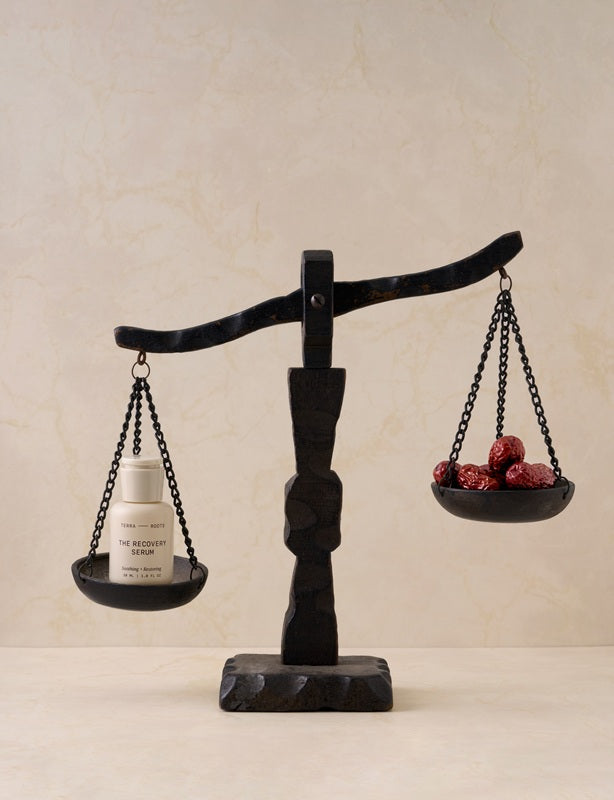
Understanding eczema can feel confusing, but supporting your skin doesn’t have to be. Learn what causes flare-ups, how eczema affects the skin barrier, and the daily habits and gentle, science-back...
If you have redness-prone, easily triggered skin, you know the cycle. You reach for “mild” or “sensitive” products. Yet your skin stays red, tight, and uncomfortable. So what’s missing? Gentle is t...