

Why Your Skin Gets More Sensitive When You’re Stressed
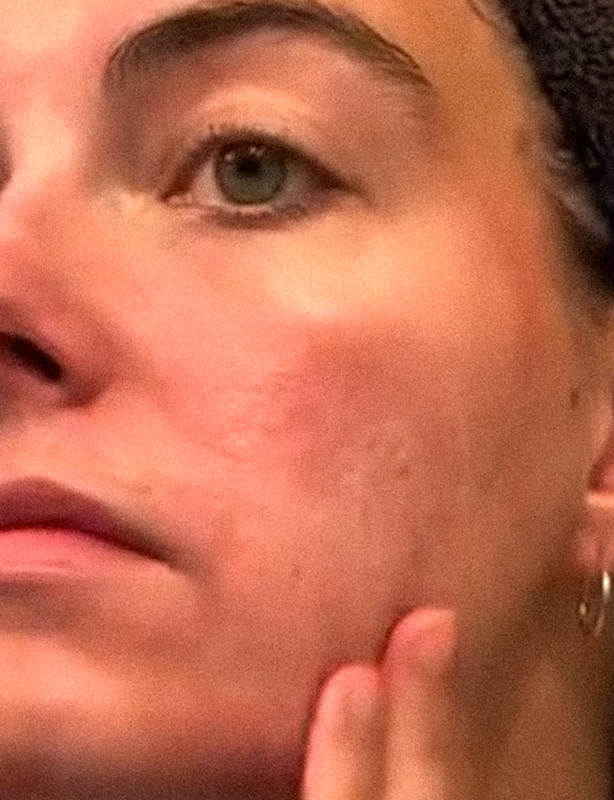
The science behind stress skin — and what your skin is actually trying to tell you.
If your skin has been more reactive than usual lately — flushing easily, feeling tight, flaring up without any obvious cause — the answer might not be in your skincare routine. It might be in your nervous system.
Most people assume sensitive skin is something you’re born with. But the science tells a different story. For the majority of people experiencing skin sensitivity, it’s acquired — a state that develops over time, often triggered by chronic stress, disrupted sleep, and a body that’s been running on empty for too long.
Why Sensitive Skin Is Usually Acquired, Not Innate?
Your skin is, at its core, an immune organ. It’s designed to protect you — forming a physical and chemical barrier between your body and the outside world. Under normal conditions, it handles that job without complaint.
But sustained psychological or emotional stress disrupts the skin’s normal physiology through the neuroendocrine system, breaking down the very structures that keep that barrier intact. The result is a state of acquired sensitivity — skin that reacts to things it used to tolerate fine.
This is an important reframe. If your skin has become more reactive over the past few years — particularly during busier or more pressured periods of your life — that’s not your skin type. That’s your stress load.
How Does Stress Make your Skin More Sensitive?
The mechanism runs through what’s known as the HPA axis — the brain’s primary stress-response pathway. When you’re under pressure, your hypothalamus signals the release of cortisol and other stress hormones. These hormones act directly on your skin cells, causing three forms of damage simultaneously:
• Barrier lipid depletion. Cortisol disrupts the lipid-rich structure of the stratum corneum — the outermost skin layer — depleting ceramides, cholesterol, and free fatty acids. These are the molecules that hold your skin cells together. Without them, the barrier develops microscopic gaps, and irritants get in while moisture gets out.
• Impaired barrier repair. Stress hormones interfere with the normal differentiation and metabolism of keratinocytes — the cells responsible for rebuilding the barrier. This means that even when damage occurs, your skin’s ability to repair itself is compromised.
• Inflammatory activation. Stress triggers the release of pro-inflammatory cytokines — including IL-1β, IL-6, and TNF-α — which drive the redness, tightness, and reactive flares that characterise stress-triggered skin.
Together, these three effects lower your skin’s tolerance threshold significantly — making it reactive to stimuli it would otherwise handle without issue.
How do you know your skin is triggered by Stress?
Stress-triggered sensitivity has a distinct pattern, different from seasonal reactivity or product sensitivity:
• Flares follow your calendar, not the season. Symptoms appear or worsen around deadlines, difficult periods at work, or emotionally demanding stretches of time.
• Multiple symptoms at once. Dryness, tightness, redness, increased oiliness, and enlarged pores often appear together rather than in isolation.
• Slow recovery. Even with targeted products, your barrier takes longer than expected to settle. This is because the stress response is still undermining repair.
• Systemic signals. Skin flares often coincide with poor sleep, fatigue, or heightened anxiety — signs that the broader stress response is active.
If your skin worsens without clear external triggers — no new products, no seasonal shift — stress is a very likely driver.
What Stress Skin Actually Needs
The instinct when skin becomes reactive is to reach for gentler products. But gentler isn’t the same as effective. Stress skin doesn’t just need less irritation — it needs actives that work at the level where the damage is occurring.
Effective stress skin care addresses three things simultaneously:
1. Barrier lipid restoration
Ceramides, fatty acids, and phytosterols (plant-derived cholesterol analogues) need to be replenished in the correct ratios. Research confirms that all three components are required together for effective barrier recovery — any single ingredient alone is insufficient.
2. Inflammation regulation
Botanicals with clinically studied anti-inflammatory properties — such as Centella Asiatica (Asiaticoside and Madecassoside), Baicalin from Scutellaria, and Glycyrrhizin from liquorice root — work by inhibiting key inflammatory pathways including NF-κB, reducing the cytokine activity that causes redness and reactivity.
3. Cortisol pathway intervention
This is where the approach becomes more targeted. Ectoin — an amino acid derivative from extremophile bacteria — has been shown to suppress cortisol’s effect on skin cells by inhibiting glucocorticoid receptor (GR) signalling. It also counteracts the stress-induced overexpression of 11β-HSD1, the enzyme that locally activates cortisol in skin tissue. In practical terms: it helps break the direct line between a stressful week and a skin flare.
How Terra Roots Is Formulated for Stress Skin
Terra Roots was built around this three-part framework — what we call cellular repair, barrier reconstruction, and neuro-calming.
The Recovery Serum uses ingredients that address the inflammatory response and cortisol pathway directly, using Ectoin and Madecassoside to stabilise the barrier at the cellular level. The Everyday Cream uses ingredients that help rebuilds the lipid architecture of the barrier using Ceramide NP, Panthenol, and Squalane — locking in repair and reducing the skin’s reactivity to external triggers.
Both products also include HQT(黃芩湯)— a TCM-derived botanical complex of Skullcap Root, Licorice Root, White Peony, and Jujube — chosen for their synergistic effect on neurogenic inflammation: the cascade that connects emotional stress to visible skin reactivity.
The goal isn’t to make skin look calmer. It’s to address the mechanism that’s making it reactive in the first place.
Not sure what’s driving your skin?
Take The Skin Signal Quiz — 5 questions to understand what your skin is responding to and what it actually needs.
References
[9] Bylka W, et al. Asiaticoside — biological activity. Die Pharmazie. 2004;59(5):339–342.
Read more
If you have redness-prone, easily triggered skin, you know the cycle. You reach for “mild” or “sensitive” products. Yet your skin stays red, tight, and uncomfortable. So what’s missing? Gentle is t...

A barrier-first guide to staying calm through heat, sun, and sweat — without adding more to your routine. When the weather turns hot, dry, reactive skin often gets more temperamental, not less. Th...